Christine
Written in the Bazaruto Archipelago, Mozambique 2010
A Dugong, a Photographer, and the Limits of Pursuit
As an underwater photographer, I have had my share of close encounters with large pelagic fish and mammals, and I have also known the frustration of small critters defying my attempts to photograph them. But I had always managed to get the photograph in the end.
Photographing the dugongs of the Bazaruto Archipelago, I thought, would be a simple exercise.
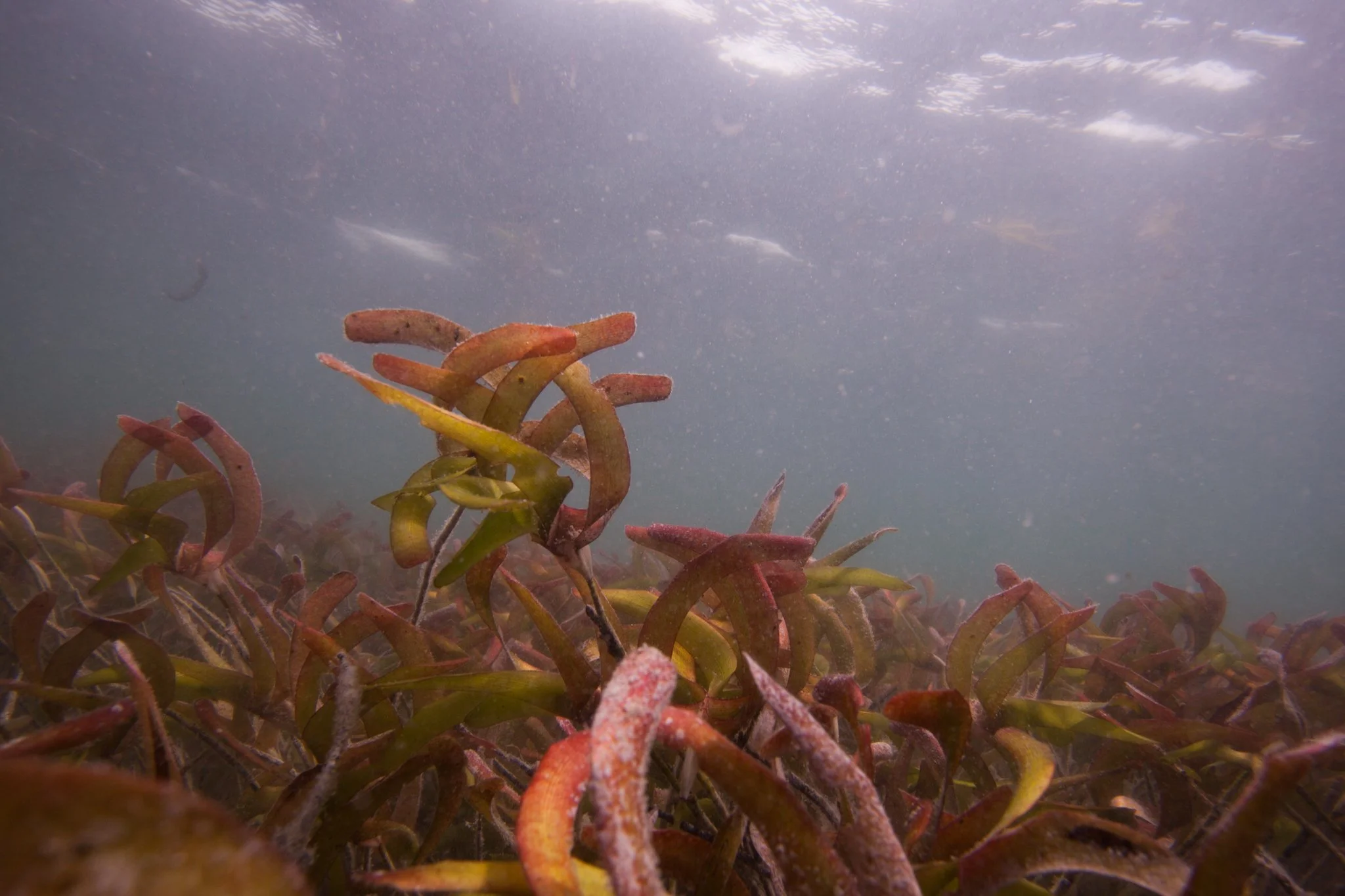
After all, dugongs are slow-moving, large, cow-like mammals that spend their days grazing on sea grass, surfacing occasionally to breathe. They are not known for speed or drama. In my mind, this was going to be straightforward.
That assumption would prove to be wrong.
I had spent time in the Inhambane area of Mozambique in 2002 and had been told repeatedly that dugongs once frequented the coastline but had long since disappeared. They had been fished out, people said. When I began to investigate more seriously years later, I did so without much expectation. Everyone I spoke to told me the same story.
Then, in August 2010, I met Karen Allen of the Endangered Wildlife Trust, who had recently begun work on a project to protect the endangered dugong population of the Bazaruto Archipelago. Surveys suggested that approximately 120 dugongs still remained in the area. It was the first genuinely hopeful information I had come across.
Karen was realistic. Although dugongs had recently been granted protected status in Mozambique, over-fishing, illegal fishing, gill-netting and increasing human activity were placing enormous pressure on the population. Resources for enforcement were limited. Without sustained effort and commitment, she believed the population would disappear.
On 17 November I flew into Vilanculos, the growing coastal town that serves as the archipelago’s nerve centre. As I stepped off the aircraft, the furnace blast of hot Mozambican air was immediate and welcome, a reminder of what draws people to this coastline.
From my lodge I looked out over the islands, marooned in a shallow, glassy sea. Variations of blue marked the channels and sea-grass beds. Dhows moved slowly across the water, manned by artisanal fishermen. It was low tide. Boats lay stranded on sandbanks. Fishermen waded the shallows looking for fish and crabs. A young boy walked past carrying a string of small fish. A lone dog patrolled the shoreline.
The following morning, operation Dugong portrait began.
I was up early, checking and re-checking my gear. At Big Blue’s dive centre I met my guides for the day, Zito and Antonio, and our skipper, Michael Klue. We loaded our boat, Spanish Fly, and set off towards Bazaruto Island, following the sea-grass beds and stopping occasionally to ask fishermen if they had seen dugongs. Each time the answer was no.
Zito remained quietly confident. He promised me, without hesitation, that we would see dugongs on the first day.
Out on the water, the scale of the task became clear. Boat traffic was constant, and it was obvious that dugongs had good reason to be wary. Although it was the closed season for netting, the legacy of gill nets was everywhere. Many dugongs had died in them.
A light morning wind had stirred up a surface chop. Dugongs surface briefly and without splash, and spotting them in the broken water would be difficult. Visibility below was no better. Even from the boat I could see suspended sediment and plankton clouding the water.
At the southern end of Bazaruto Island we slowed to a gentle drift.
We drifted in the channel between Bazaruto and Benguerra islands for close to forty minutes. The boat moved quietly. Four sets of eyes scanned the water in silence. I slipped into a mild funk, idly wondering whether landscape or wedding photography might be a more sensible career choice.
Then Zito shouted.
“There, there… get ready.”
Disbelievingly, I looked to where he was pointing and saw a brown, whiskered snout break the surface. A dugong. It was there.
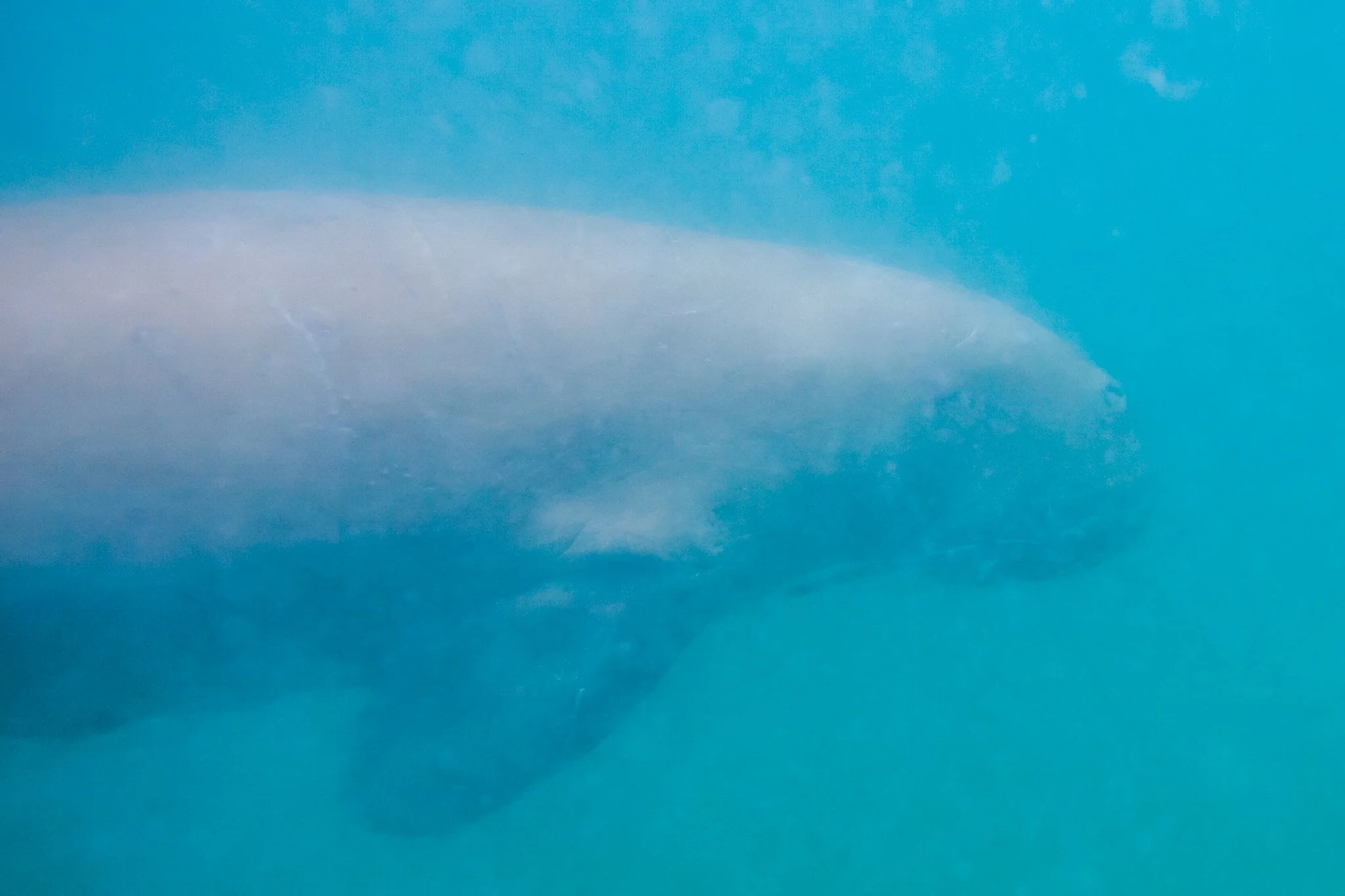
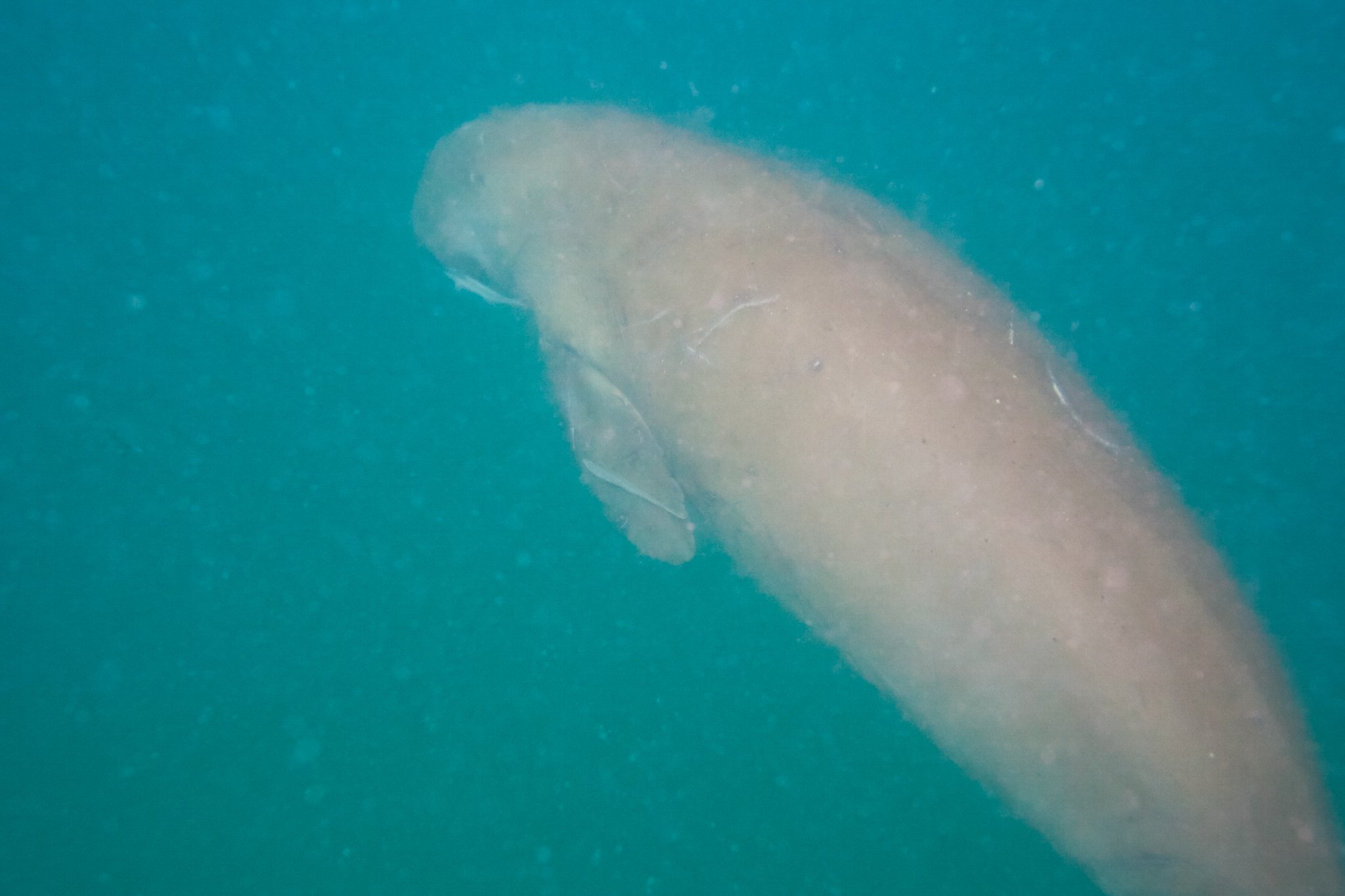
Trying desperately to be quiet, I slipped into the water while Zito and Antonio directed me. Head down, camera in hand, I moved toward where they were pointing. Suddenly I saw her: a large, brown, rotund shape with a soft, almost dog-like face. She cruised past slowly, close enough for me to fire two frames.
And then she was gone.
Michael and I exchanged a high-five underwater as the boat repositioned. We flashed across the surface and duck-dived again. At around eight metres I caught a glimpse of her tail before she disappeared once more.
And so it went. For the next three hours we finned quietly on the surface under Zito and Antonio’s direction, duck-diving whenever the dugong appeared. Sometimes I managed a few shots. Mostly I didn’t.
Predicting her direction was nearly impossible. She followed the sea-grass beds without any obvious pattern, surfacing every ten minutes or so to breathe briefly. Eventually the tidal currents sapped our strength. As the tide pushed in, she headed out into the channel and deeper water, and we let her go.
For the next three days we repeated the same routine.
We learned to be quiet in the water. By then Zito had named her Christine. Gradually she became more tolerant of our presence. She surfaced more often and closer to the boat, but the water remained thick with plankton and jellyfish. Underwater photographs were nearly impossible. I ended up with frame after frame of dugong shapes obscured by drifting life, despite not using strobes.
Each day, when she left the inter-island channel, we followed her, hoping she might lead us to clearer water. And each day, when she chose to, she disappeared completely.
At the end of the fourth day I reviewed my photographs. Christine was a large animal, well over 200 kilograms. Her body bore numerous scars, likely from nets she had escaped. Dugong hunting had only recently been banned in Mozambique, and enforcement was limited.
Christine had humbled me.
She taught me that wild animals are not there to be exploited by humans, whether as farmers, fishermen, zookeepers, circus owners, or underwater photographers. Wild animals are exactly that: wild and free, and deserving of respect, restraint, and care.
I had my dugong photographs. They were special, but only to me. They were not award-winning, not front-page material, and not something to boast about. But I was not disappointed. I had been allowed briefly into Christine’s world, on her terms, and that was enough.